One of the first questions every event host asks is: how many tables and chairs do I need for my event? Order too few and guests squeeze together uncomfortably. Order too many and you waste money on equipment that sits empty. This guide walks you through a straightforward method for calculating both, whether you are planning a backyard graduation party for 50 or a wedding reception for 150.
Understand Your Table Types Before You Count
Not all tables serve the same purpose. The type you choose changes how many you need and how your space feels.
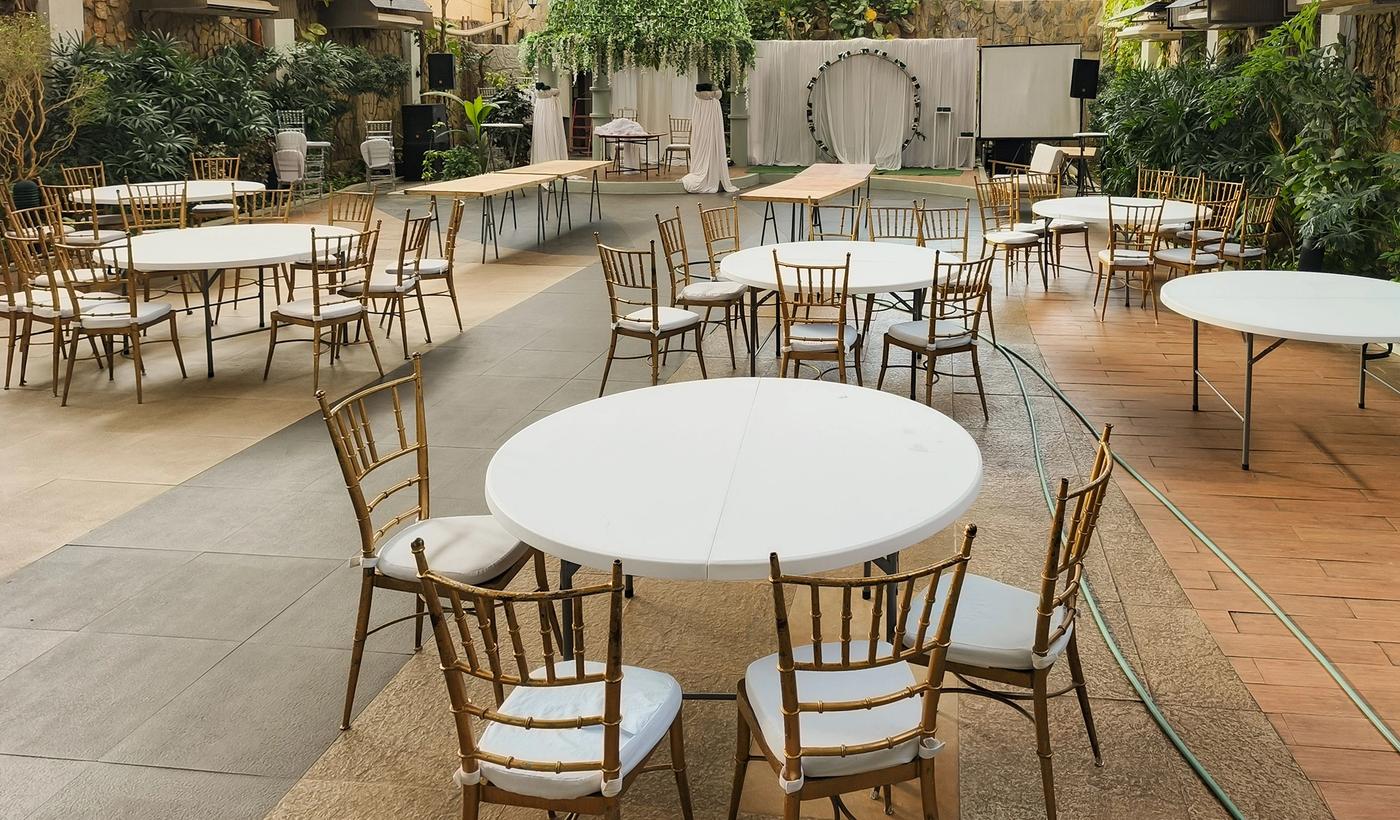
- Round banquet tables (60-inch diameter): seats 8 guests comfortably, up to 10 in a tighter arrangement. Best for dinner receptions and seated meals.
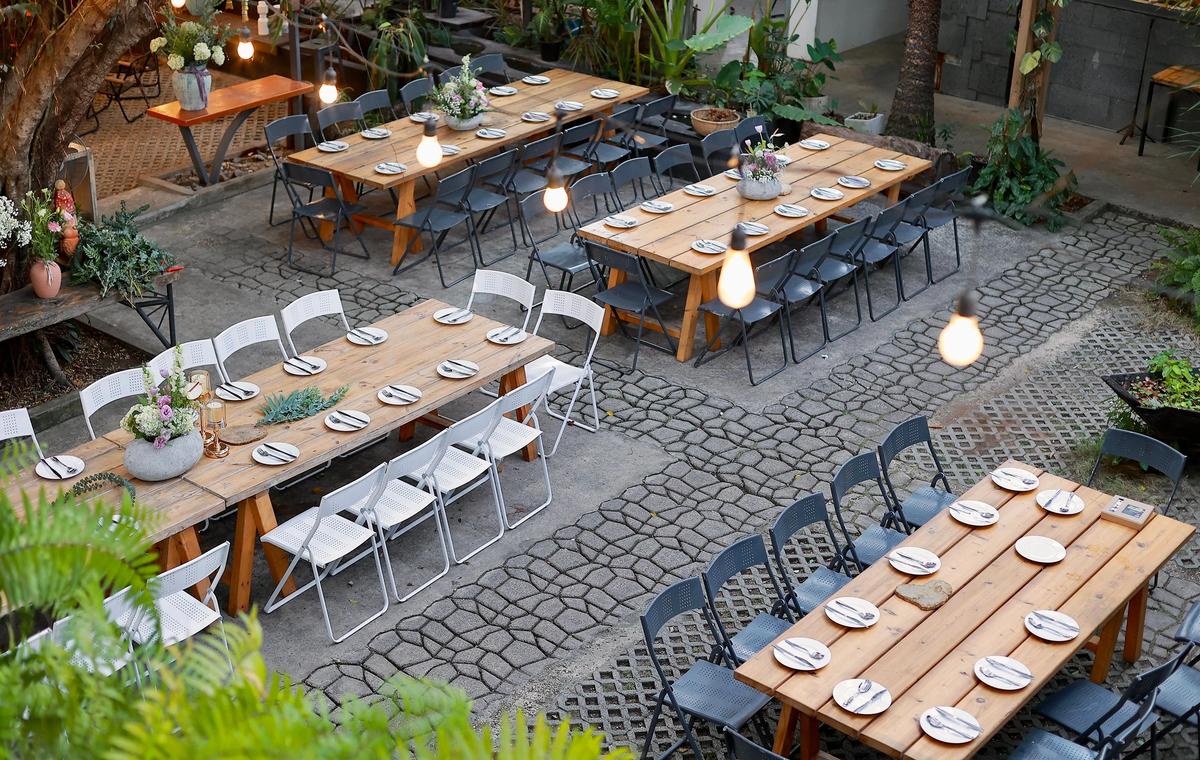
- Rectangular 6-foot tables: seats 6 to 8 guests. Works well for buffet lines, gift tables, and rectangular room layouts.
- Rectangular 8-foot tables: seats 8 to 10 guests. Common for long banquet-style seating.
- Cocktail (high-top) tables: standing height, no chairs needed. Used for mingling areas, bars, and casual receptions.
- Kids tables: typically seats 6 to 8 children at a lower height.
Knowing which table type fits your event style is the starting point for every count that follows.
How Many Banquet Tables Do I Need?
The formula is simple: divide your confirmed guest count by the number of seats per table, then add 10 percent as a buffer for last-minute additions or a vendor table.
For TG Event Rental customers planning seated dinners, here are the common starting points by guest count:
- How many tables do I need for 50 guests: at 8 per round table, you need 7 tables. Add one for gifts or a cake, bringing the total to 8.
- How many tables do I need for 100 guests: 13 dining tables plus 1 to 2 utility tables, so plan for 14 to 15 total.
- How many tables do I need for 150 guests: 19 dining tables plus 2 to 3 utility tables, so plan for 21 to 22 total.
If you choose 6-foot rectangular tables at 6 guests per table, divide your guest count by 6 and add the same 10 percent buffer. A guest count of 100 with 6-foot tables means roughly 17 to 18 dining tables.
Always reserve a separate table for the buffet or food station. Since this table won’t seat any guests, don’t include it in your guest table count. When requesting a free estimate for your full setup, mention your catering style so the team can account for any additional food-service tables.
How Many Cocktail Tables Do I Need for a Party?
Cocktail tables serve a different function. They give guests a surface for drinks and plates during a standing reception or mingling period. They do not replace seated dining tables.
A common ratio is one cocktail table for every 8 to 10 standing guests. For a 60-person cocktail hour before a seated dinner, plan for 6 to 8 high-top tables scattered through the space.
If your entire event is a standing cocktail-style reception with no seated meal, increase that ratio to one table for every 6 guests so no one is stuck searching for a surface.
Calculating Chairs
Chair counts follow directly from your table count, but a few situations require extras.
- One chair per confirmed guest for seated dinners.
- Add 5 to 10 percent for no-show buffer or unexpected plus-ones.
- Ceremony seating for weddings is calculated separately from reception seating. If both happen in the same space, you may be able to flip the chairs, but budget extra time for that transition.
- Head tables often use chairs on one side only, so count those seats separately and do not assume they match a standard round-table count.
For a 100-guest seated dinner, order 100 chairs plus 10 spares, for a total of 110. That small buffer has saved many hosts from a last-minute scramble.
Account for Space and Layout
Tables and chairs must fit your venue. A 60-inch round table needs roughly 10 feet of diameter when you add chairs and walking space around it. That means each round table occupies about 78 square feet of floor space.
For a 100-guest event with 13 round tables, you need at least 1,000 square feet of usable floor space just for dining. Add room for the dance floor, buffet line, and DJ or band setup, and most 100-person receptions need 2,000 to 2,500 square feet under cover.
If your yard or venue runs smaller, consider 6-foot rectangular tables, which pack more guests into a tighter footprint.
Pro Tips for Getting the Count Right
- Use your RSVP number, not your invitation number. Invited guest lists run 15 to 20 percent higher than actual attendance at most casual parties.
- Place utility tables last. Count gift, cake, DJ, and buffet tables after you’ve seated all guests, not before. Mixing them in too early inflates your table count and reduces your available seating.
- Match chair style to table height. Cocktail tables need bar-height stools, not standard banquet chairs. Mixing heights looks awkward and leaves guests uncomfortable.
- Sketch the layout before you order. Even a rough hand-drawn grid of your yard or venue will catch crowding problems that a number alone will not reveal.
Common Mistakes to Avoid
- Ordering chairs equal to your invited count instead of your expected attendance count.
- Forgetting vendor and utility tables, then running short on dining tables when those extra orders arrive.
- Choosing 10-person round tables for a small yard without verifying there is enough clearance between tables for guests to walk through.
- Assuming one table size works for every function. Your buffet table, head table, and guest tables serve different purposes and may need different sizes.
Frequently Asked Questions
How many chairs fit at a 60-inch round table?
A 60-inch round table seats 8 guests comfortably. You can fit 10 chairs if space is tight, but guests will have less elbow room and the chairs will crowd the table edge. For a relaxed dinner setting, 8 is the standard.
Do I need extra tables for a buffet line?
Yes. A standard buffet for 100 guests typically uses two 8-foot rectangular tables side by side to hold food, serving dishes, and utensils. These tables do not seat guests and should be counted separately from your dining table total.
How far in advance should I reserve tables and chairs?
For spring and summer events in the Kansas City metro, booking 4 to 8 weeks ahead is a safe window. Peak graduation and wedding weekends fill faster. TG Event Rental accepts same-week bookings when equipment is available, but popular dates go quickly.
Can I mix round and rectangular tables at the same event?
Yes, and many hosts do. A common approach is round tables for main guest seating and rectangular tables for the buffet, gift station, and kids section. Just make sure your linen sizes match each table shape, since round and rectangular linens are not interchangeable.
Does TG Event Rental deliver and pick up the tables and chairs?
Yes. TG Event Rental delivers to Olathe, Overland Park, Lenexa, Shawnee, Lee's Summit, Independence, and surrounding areas within a 50-mile radius of Olathe, KS. Delivery and pickup costs are shown upfront with no hidden fees. You can also self-pick-up select items if that works better for your schedule.
What if my guest count changes after I place my order?
Contact the TG Event Rental team as soon as your count shifts. Same-week adjustments are possible depending on availability. If you need to cancel, funds are held as a one-year rain-check rather than forfeited, so your deposit is not lost.