Choosing between a frame tent vs canopy tent is one of the first decisions you'll make when planning an outdoor event. Both shelter your guests from sun and light rain, but they work differently, set up differently, and suit different occasions. Understanding those differences before you book saves you from a setup headache on party day.
This guide walks you through how each tent works, where each one excels, and which situations call for one over the other, so you can make a confident choice for your backyard party, graduation, or community event.
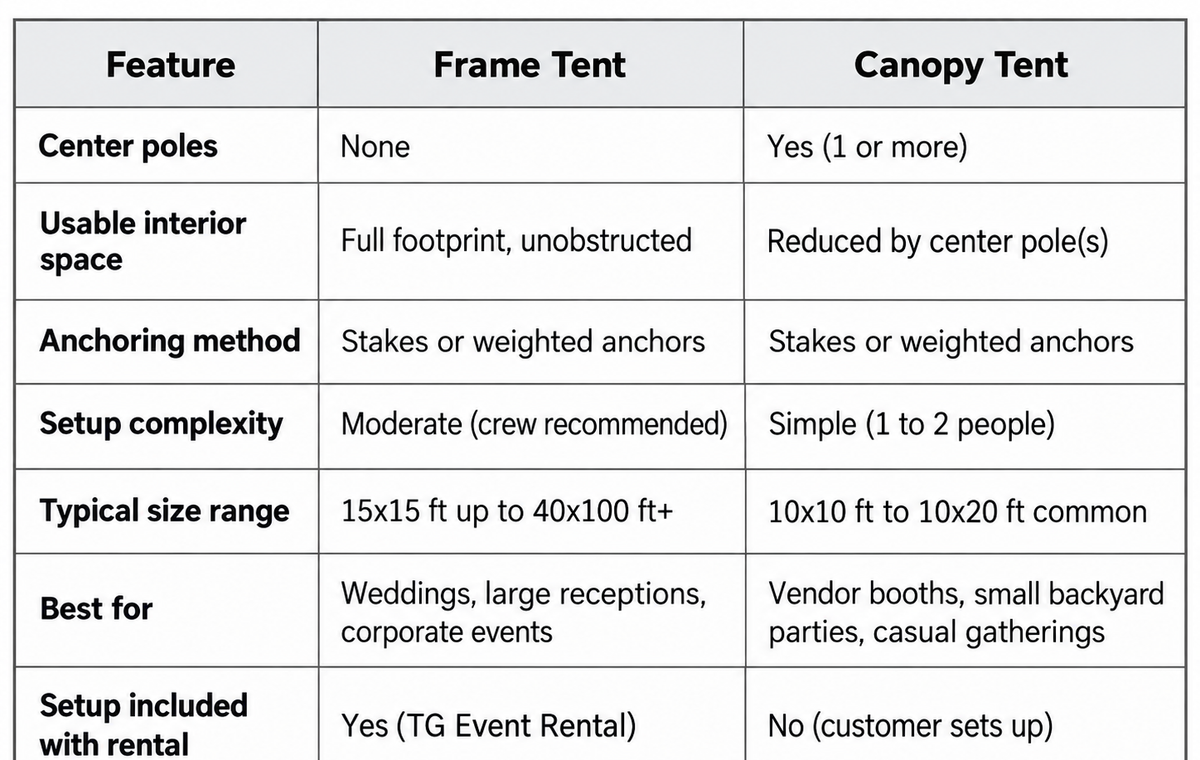
Quick Comparison: Frame Tent vs. Canopy Tent
What Is a Frame Tent?
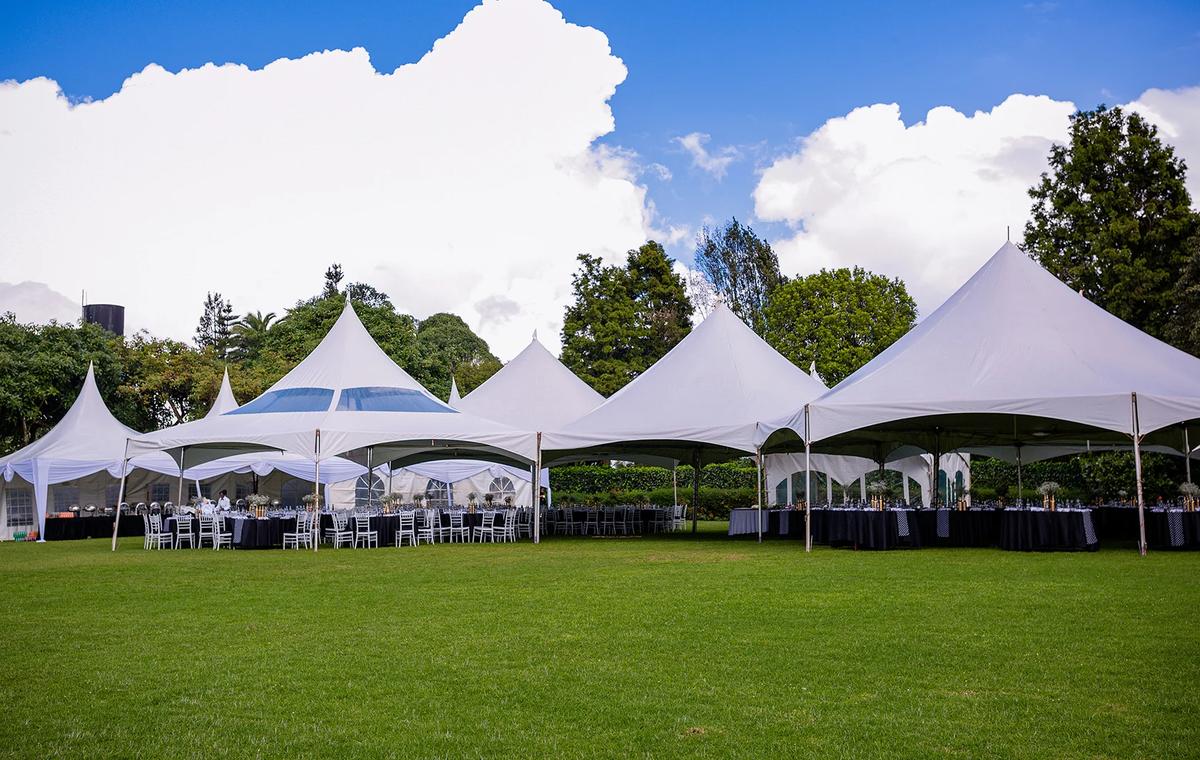
A frame tent uses an aluminum pipe framework to support the fabric canopy from the outside. Because the structure is self-supporting, there are no center poles inside. Every square foot of floor space is open for tables, chairs, dance floors, or food stations.
Frame tents are the standard choice for weddings, graduation parties, and corporate events where layout matters. You can arrange seating any way you like without working around a pole in the middle of the room. They also work on hard surfaces like concrete or pavers because they can be weighted rather than staked into grass.
The tradeoff is setup complexity. Frame tents require more time and more hands to assemble safely. TG Event Rental includes professional setup with every frame tent rental, so that work is handled for you. Options range from a compact 15 x 15 marquee frame tent for intimate gatherings up to a spacious 20 x 40 x 8 white frame tent for larger crowds. If you need something in between, the 20 x 20 x 8 peak white frame tent covers a sweet spot for mid-size events.
Before your rental arrives, it helps to know how to prepare your yard or venue for a tent setup so the crew can work efficiently and the tent is anchored safely.
What Is a Canopy Tent?
A canopy tent uses one or more center poles to push the fabric upward. The poles support the roof directly, which means there is always at least one obstruction in the usable space underneath. Most canopy tents are quick to set up and compact enough for one or two people to handle without a crew.
The most common sizes run from 10x10 ft to 10x20 ft. That footprint works well for vendor booths at community events, small backyard cookouts, or an extra shade station alongside a larger tent setup. The quick-set 10 x 15 canopy tent is a good example of a canopy tent suited for casual outdoor use.
Canopy tents are lighter and faster to deploy, but they are not designed for events where you need to seat 50 or more guests under a single shelter. The center pole limits furniture placement and can become a tripping hazard in high-traffic areas.
Which Tent Type Is Best for an Outdoor Event?
The right answer depends on guest count, surface type, and how formal the event is. Here is a straightforward breakdown by scenario:
- Weddings and receptions: Frame tent. You need unobstructed floor space for tables, a dance area, and a head table. No center pole means no compromises on layout.
- Graduation parties (30 to 80 guests): Frame tent. Guests move around, food tables need clear access, and a polished look matters. A frame tent handles all of that.
- Backyard cookout (under 20 guests): Canopy tent. A quick-set canopy provides enough shade for a small crowd without the setup time or cost of a full frame tent.
- Vendor booth or activity station: Canopy tent. The smaller footprint and fast setup make it practical for festival booths, registration tables, or outdoor sales setups.
- Corporate outdoor events: Frame tent. Branded layouts, presentation areas, and networking spaces all benefit from an open floor plan.
- Hard surface venues (patios, parking lots): Frame tent with weighted anchors. Canopy tents also work on hard surfaces, but frame tents offer more stable coverage for larger groups.
If you are still working out how many guests fit under a specific tent size, this guide on what size of tent you need covers capacity by layout style.
Are Frame Tents Better Than Canopy Tents?
Neither tent is better in every situation. Frame tents offer more usable space and a cleaner look for formal events. Canopy tents are faster and simpler for casual, small-scale coverage. The difference between a frame tent and a canopy tent comes down to what your event actually requires.
For most events in the Kansas City metro, including graduation parties, backyard weddings, and community gatherings across Gardner, Leawood, Prairie Village, and Grandview, a frame tent is the more versatile choice. It scales up to match your guest count, and professional setup is included. If you are adding a small shaded station alongside another rental or hosting a very casual afternoon gathering, a canopy tent covers that need at a lower price point.
What to Confirm Before You Book
Before reserving either tent, run through these practical questions:
- How many guests will be seated or standing under the tent at one time?
- Is the ground grass, gravel, concrete, or pavers?
- Are there overhead obstructions like tree branches or power lines?
- Do you need sidewalls for privacy or wind protection?
- What other equipment, tables, chairs, and linens, will share the space?
Answers to these questions will narrow your choice quickly. You can also review TG Event Rental's rental policies to understand deposit requirements, cancellation terms, and delivery details before committing. TG Event Rental serves Olathe, De Soto, Spring Hill, Merriam, Mission, and surrounding communities within a 50-mile radius of Kansas City, with transparent pricing and no hidden fees.
The Right Tent for Your Event Is a Straightforward Choice
Frame tents work for most events where guest count, layout, and appearance matter. Canopy tents fill a useful role for small, casual, or supplemental coverage needs. Match the tent type to your guest count and surface, and you will be in good shape.
TG Event Rental has served Kansas City families and organizations since 2015, delivering clean, inspected equipment with setup included for every frame tent rental. Get a free estimate and let the team help you choose the right tent and size for your event.
Frequently Asked Questions
Can a canopy tent be used for a wedding?
A single canopy tent is generally too small for a wedding reception. Most canopy tents top out at 10x20 ft, which comfortably covers around 8 to 12 seated guests. A frame tent is the better choice for weddings with 20 or more guests because the open interior fits full table and chair layouts without obstruction.
Do I need permits for a tent in Kansas City?
Permit requirements vary by municipality and tent size. Most jurisdictions in the KC metro require a permit for tents over a certain square footage, often 400 to 900 sq ft. Check with your city or county before booking, and ask your rental provider whether they have experience navigating local requirements in your area.
How far in advance should I book a tent rental?
For spring and summer events, booking 4 to 8 weeks ahead gives you the best selection. Graduation season in May and June and wedding season from May through October drive the highest demand. Same-week bookings are sometimes available when equipment is open, but popular sizes fill quickly during peak months.
What happens if it rains on my event day?
Both frame tents and canopy tents provide shelter from light rain. Frame tents, especially those with optional sidewalls, handle wind-driven rain better than open canopy tents. If severe weather is forecast, contact your rental provider to discuss options. At TG Event Rental, cancellation funds are held as a one-year rain-check rather than forfeited, so you are not penalized for weather.
Is setup included with tent rentals?
Setup is included with frame tent rentals from TG Event Rental. Canopy tents are customer-assembled. If you are renting a frame tent, the crew handles assembly and ensures the structure is properly anchored before leaving the site.